The Right to Mobility
The Right to Mobility, as articulated in the Charter of Palermo, emphasizes that freedom of movement should not be restricted by birthplace, nationality, or immigration status. The Charter frames mobility as a fundamental human right essential to dignity, equality, and self-determination in an interconnected world. The document also criticizes restrictive immigration systems, including visa regimes, border militarization, and unequal mobility rights, that privilege some populations while excluding others.
Attorneys in Palermo, including at the University of Palermo’s free clinic serving migrants, actively support migrants from multiple continents in securing legal papers that realize their right to mobility as well as that of their children and other family members. Migrant and diaspora community associations likewise support people in overcoming both the legal and financial challenges that limit many people’s mobility, assisting with the acquisition of papers and raising funds to pay for people’s travel.
Participants in the interviews for this research pointed to numerous ways the mobility of people in their communities is restricted – by Italian and European laws, border enforcement, and the slow and restrictive bureaucracies that force people to wait long periods to access legal papers and the rights they afford, including to legal residence, shelter, work, and other essential aspects of life.
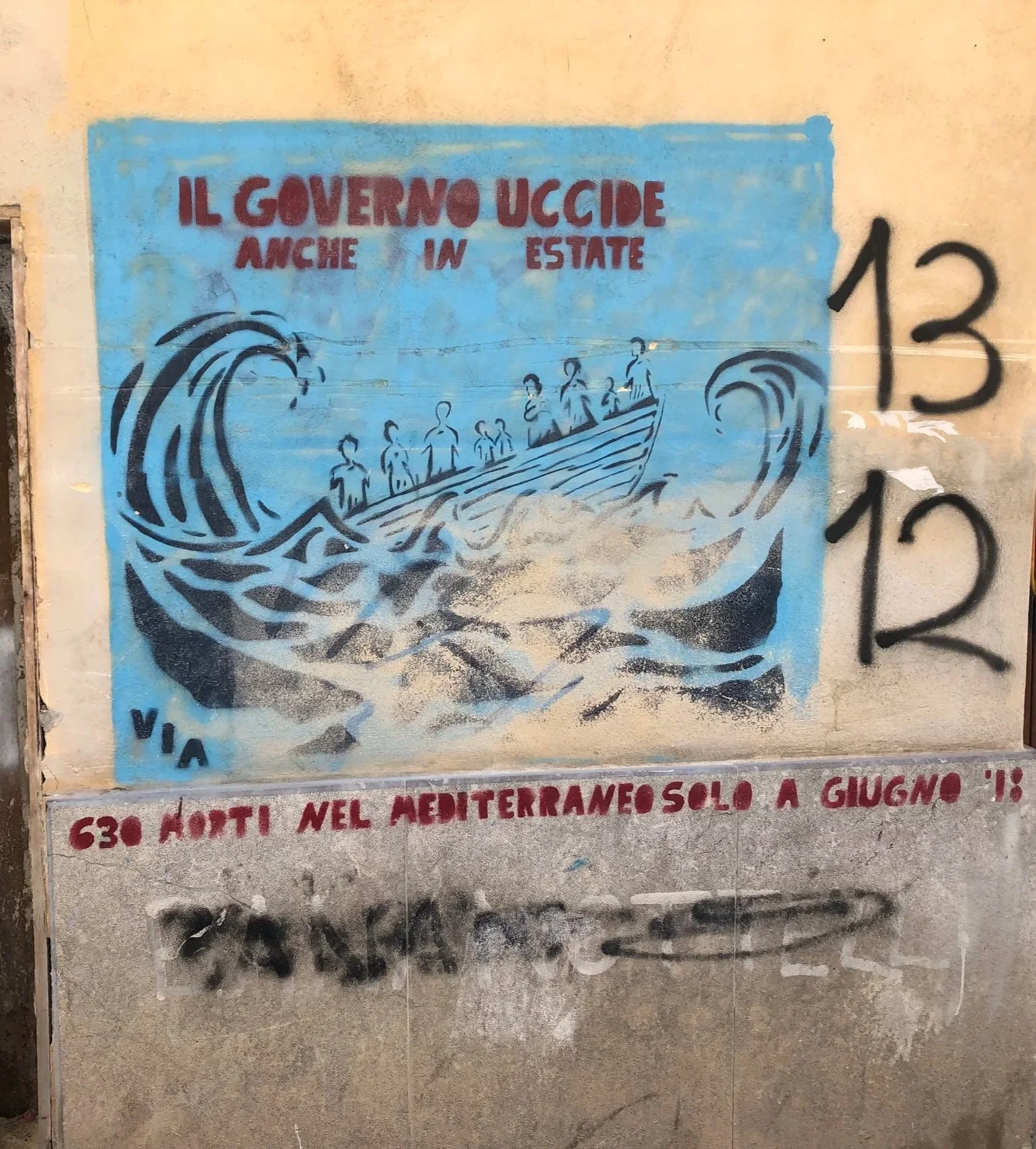
A mural in central Palermo charging that “the government kills even in summer… 630 deaths in the Mediterranean just in June 2018” (a reference to the film The Mafia Kills Only in Summer).
-
“If we think about it, it's a system that should be easy, right? Giving people opportunities through humanitarian corridors, allowing them to choose their visas, easing the rules a bit between humanitarian corridors and visas. And from a personal experience, let's say, how are these rights being realized in your personal journey? How do you see this? I see it as very distant. They don't want to realize certain rights. The government, at the governmental level, doesn't want to facilitate arrivals, they don't want to facilitate reception either.”
—Member of the Algerian Community
-
"It’s something the Italian State should have planned for and built into the system from the start. What I mean is: these things happen; a child is born—it’s a fact of life—but that child didn’t ask to be here; they are innocent."
—Member of the Ivorian Community
-
"My residence permit, I need it to visit my parents, to have my rights as a citizen."
—Member of the Moroccan Community