Freedom from Torture and Exploitation
The Right to Freedom from Torture and Exploitation, as reflected in the Charter of Palermo, affirms that all people must be protected from violence, abuse, degrading treatment, and exploitative conditions throughout migration and settlement. The Charter calls on institutions to recognize, support, and protect survivors of torture and exploitation through accessible legal, social, and healthcare systems grounded in human dignity.
Palermo has been an important center of Italy’s ethno-psychiatry and ethno-psychology fields, which have grown up in response to the trauma experienced by people migrating through the violent and exploitative Central Mediterranean corridor. Nonprofit organizations like Centro Penc and CESIE have developed individual and group programs supporting survivors of torture and other traumas. Women of Benin City, the first anti-trafficking association in Italy founded and run by women who experienced sex trafficking themselves, and a partner in this project, supports Nigerian women who have freed themselves from their traffickers. Fortunately, the prevalence of trafficking has diminished in the 2020s, thanks partly to efforts in Nigeria.
Participants in our interviews, however, did share their own and other people’s experiences of exploitation of various sorts, including at work and in their migration journeys. Italy and Europe’s externalization and militarization of borders, along with limiting of asylum and other legal migration pathways, continues to create spaces for exploitation in migration, work, shelter, and other aspects of migrants’ lives.
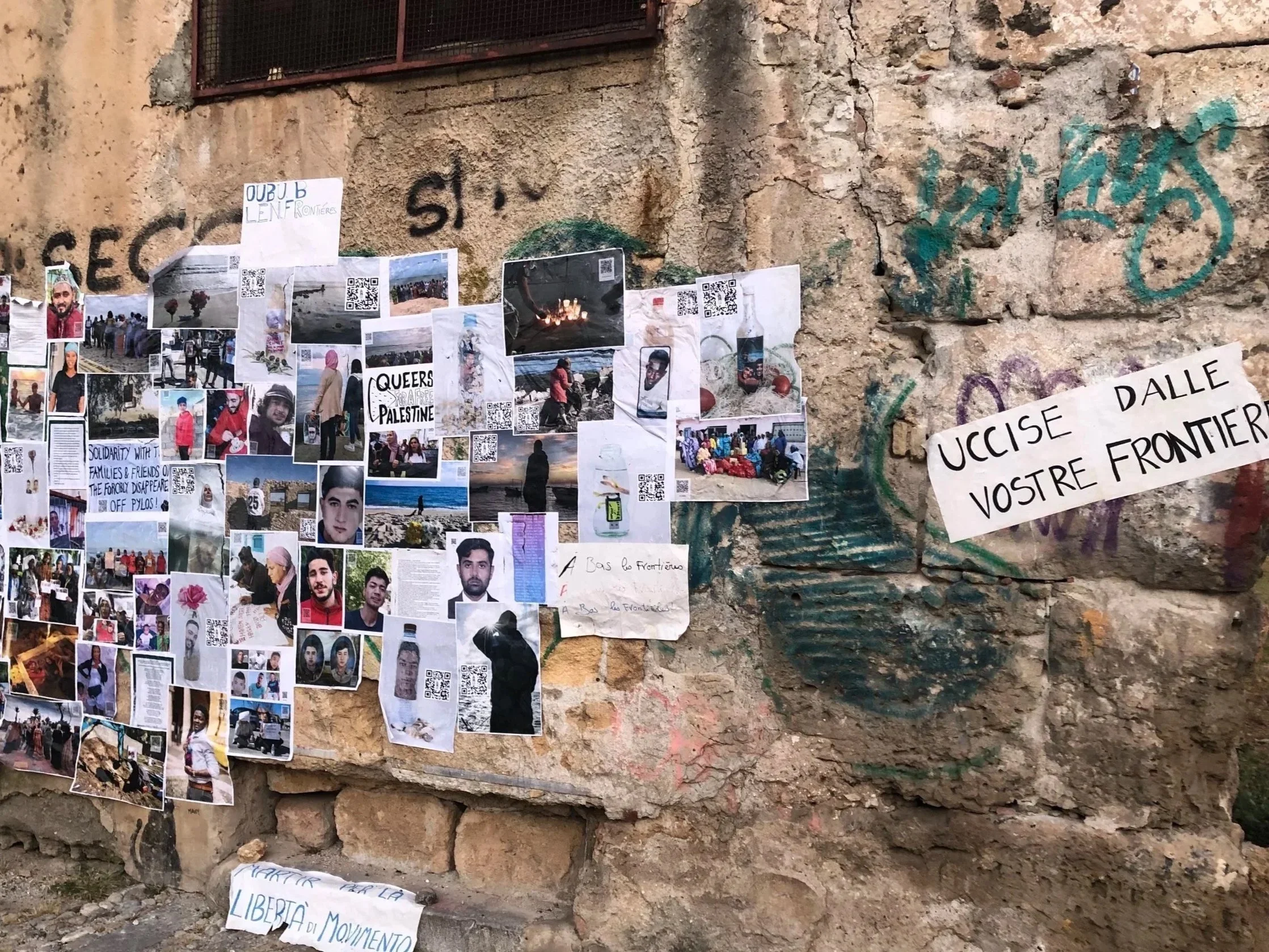
A collage in central Palermo with images of people who died in Libya or crossing the Central Mediterranean. The text at the right reads, “killed by your borders.”
-
“I just try to survive… In Libya, I was there 5 months or 6 months… They will not pay you. So you have to go [work without pay]. You don't have to complain about your money. Because if you complain, maybe there is lot of criminal there. They will kidnap you and then they will take you to his house. And then they will ask you to call your family to send money, which is too much… money. And then it is very difficult for you. So you have to go and then you plan for another day. So we are surviving like that and struggling.”
—Member of the Gambian Community
-
“We were [in Tunisia] after the [anti-migrant] speech by Tunisian President Kais Saied… at the beginning of 2023. There was an anti-migration crisis amongst the local population, against sub-Saharan migrants. There was a witch hunt. Migrants were being hunted. We were forced to live in maquis, as they say, in hidden places… We were filled with anxiety, fear. And being abandoned, left to our own devices, it was difficult to find water to drink in the desert and all that.”
—Member of the Ivorian Community
-
"Foreigners have even more difficulties because they can no longer rent [from landlords who deny them apartments], and labor exploitation is also a concern."
—Member of the Algerian Community
-
"They don't pay well, and they don't offer proper contracts—nothing at all. It's like pouring water onto sand."
—Member of the Moroccan Community
-
"Whenever we, the Blacks, work... the amount of money... that's not the same amount that they're giving to the white people."
—Member of the Ghanaian Community