Background
Since the late 20th century, Palermo, the capital of Sicily and the fifth-largest city in Italy, has become a destination for diverse migrant and diaspora communities from around the world. Substantial communities of people from Bangladesh, the Philippines, Tunisia, and ethnic Tamils from Sri Lanka have lived in the city since the 1980s. In the 2000s, large communities of people from North and West Africa, South and Southeast Asia, Eastern Europe, and smaller groups of people from Latin America and other parts of the world settled in Palermo.
In the 2010s, the Central Mediterranean became the deadliest migration corridor in the world, with Sicily serving as the main point of arrival for people from across Africa and Asia traveling by boat from the coasts of Libya and Tunisia. Palermo, a major point of entry into Europe, became an important center of migrant rights movements, building on its history as a hub of anti-mafia movements that likewise promoted human rights and pathways to legal work and freedom from violence and exploitation. In 2015, the administration of Mayor Leoluca Orlando, the foremost anti-mafia mayor in Italy and a champion of migrant rights, issued the Charter of Palermo.
This project took stock of Palermo’s migrant and diaspora communities’ experiences of human rights a decade after the Charter was issued. What rights are being realized, how and by whom, in different communities? What rights remain denied? What work remains to be done to realize all people’s rights in the city, in Italy and Europe?
Other pages of this website document the results of this research; and in the “action” page also the ongoing work of the project partners in promoting human rights in their communities.
An excerpt from longtime Palermo Mayor and Member of European Parliament Leoluca Orlando’s speech at the presentation of our research results, at Moltivolti, Palermo (June 13, 2026).
Nationality Number % of non-Italian citizens
Bangladesh 6,397 24.7%
Sri Lanka 2,730 10.5%
Romania 2,502 9.6%
Ghana 2,464 9.5%
Philippines 1,639 6.3%
Tunisia 1,187 4.6%
China 1,000 3.9%
Morocco 977 3.8%
Nigeria 875 3.4%
Mauritius 758 2.9%
Côte d’Ivoire 537 2.1%
Ukraine 352 1.4%
Gambia 268 1.0%
Table: Migrant/diaspora population officially registered in Palermo, January 1, 2025, by nationality [this includes children born in Italy, as the nation does not grant birthright citizenship]. All groups that make up at least 1% of Palermo’s registered foreign population are included in this table. (Source: Tuttitalia)
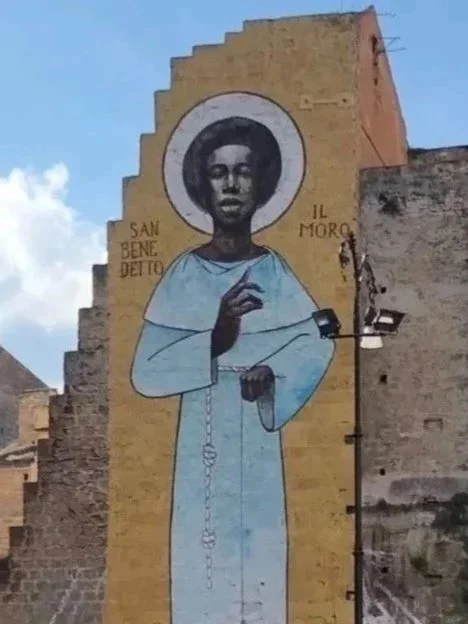
Mural of Saint Benedict the Moor, one of Palermo’s two patron saints.
The Charter of Palermo elaborated on the various rights that Europe and Italy guarantee to all people in their constitutions, laws, and United Nations conventions to which they are signatories – rights to:
The Project
-
This 2-year project was designed and organized by members of diverse migrant and diaspora communities in Palermo with colleagues from the University of Pennsylvania.
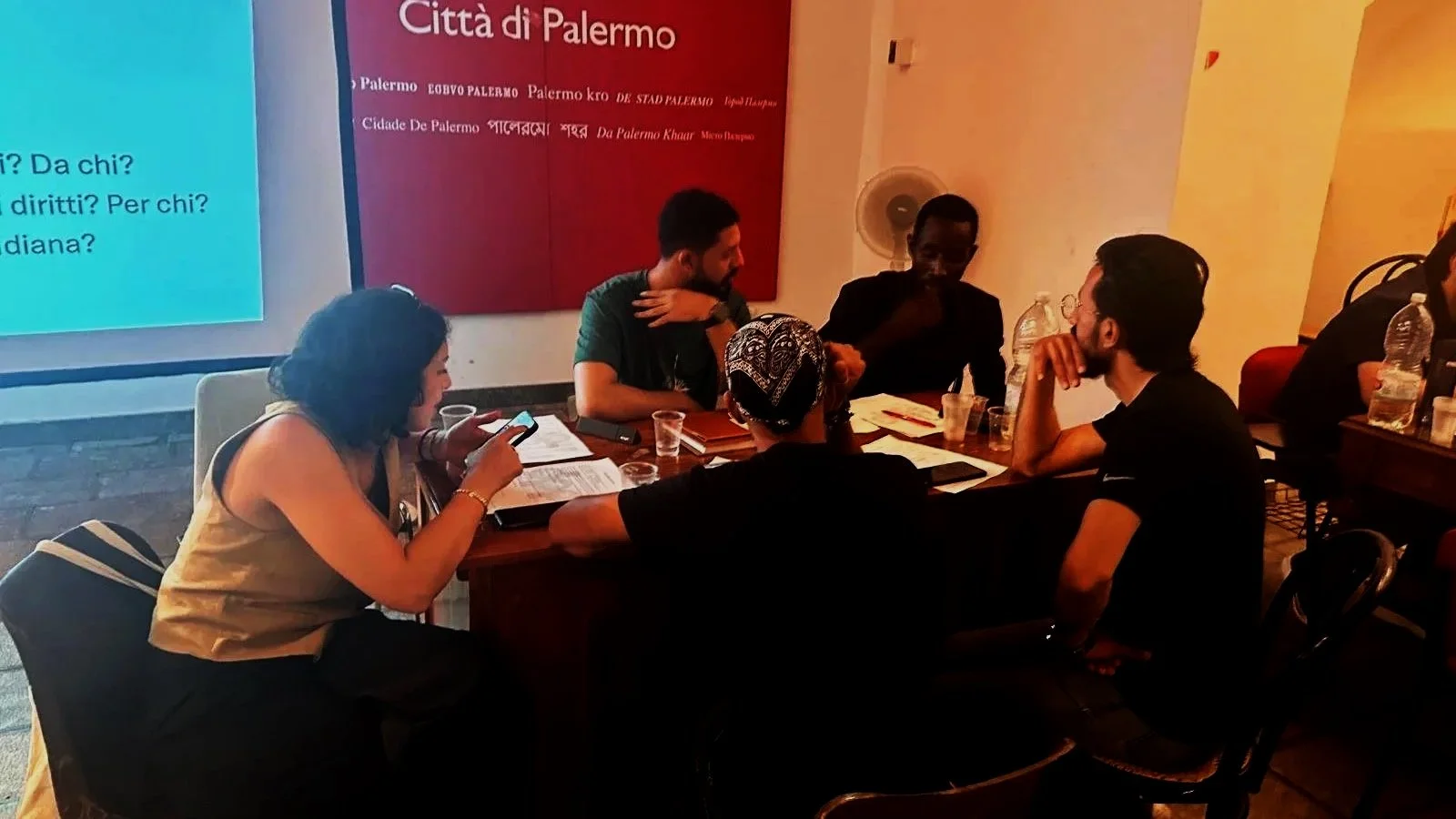
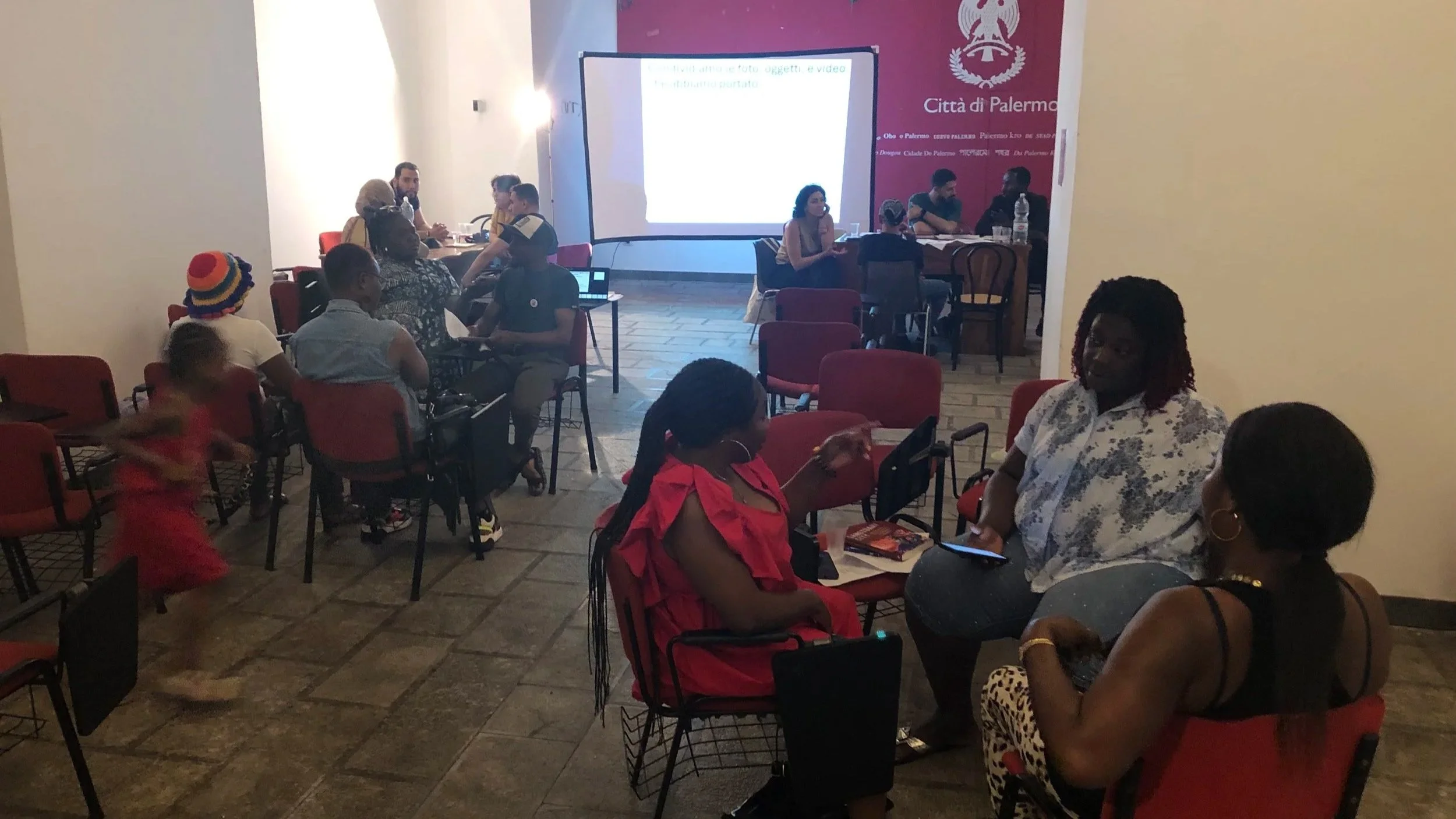
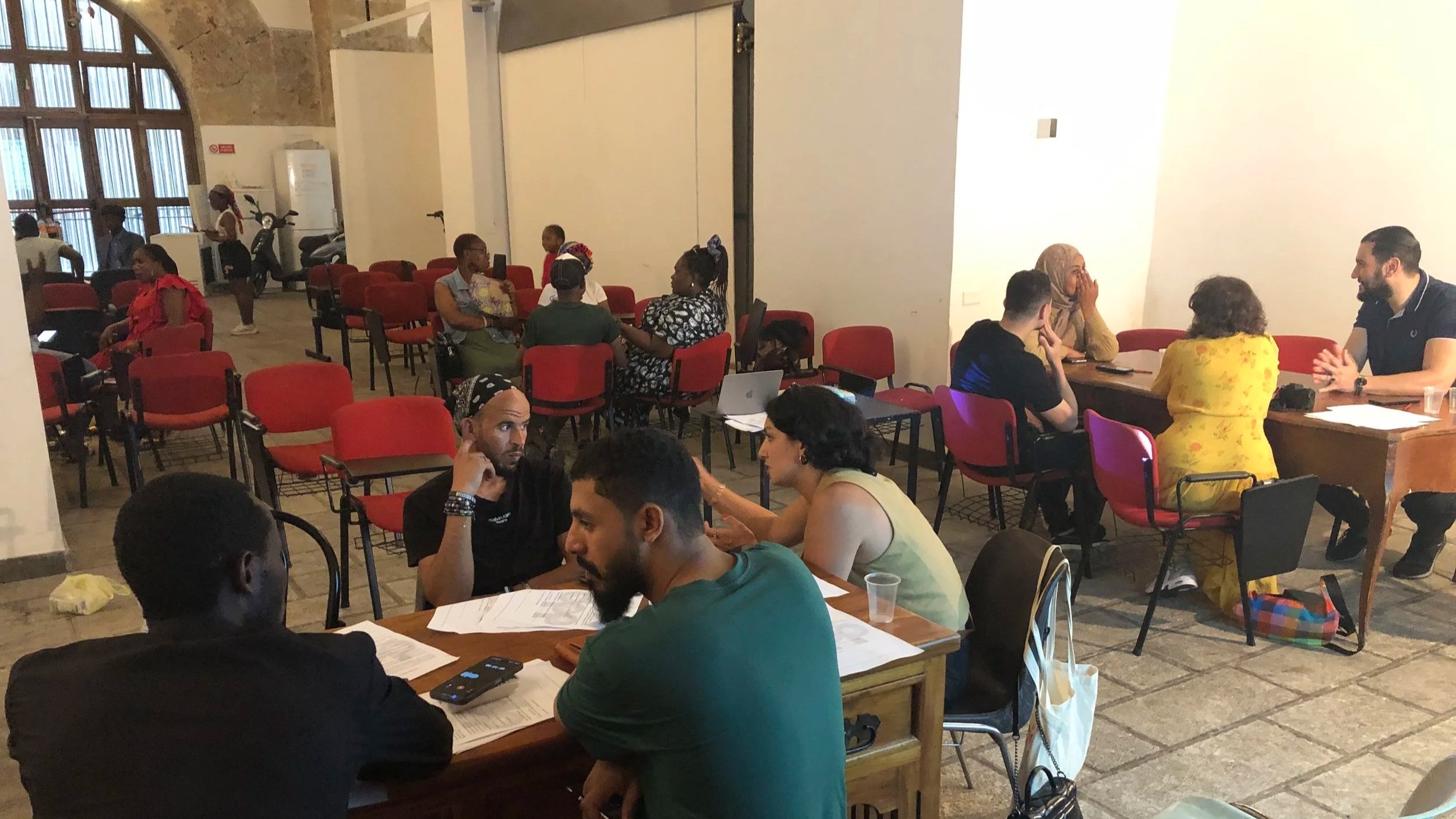
In its first year, facilitators from the city’s North and West African, South and Southeast Asian communities conducted photo/voice discussions with people in their communities. They asked participants to each bring a photograph, object, or brief video that illuminated how particular rights were realized – or not realized – in their community. Each participant shared how the thing they brought represented their community’s experiences of one or more human rights. People of various ages, genders, and parts of the world shared a great diversity of stories, issues, and critical analysis in these group discussions, which typically included four or five people from one community.
The 105 people who participated in photo/voice discussions reflected the diversity of Palermo’s migrant and diaspora communities, including first and second generation migrants from: Algeria (7 participants); Bangladesh (12); Chad (1); Côte d’Ivoire (12); Egypt (1); Gambia (5); Ghana (15); Libya (1); Iraq (1); Morocco (14); Nigeria (12); Philippines (7); Sri Lanka (12); Tunisia (2); and Venezuela (1). [The only non-European diaspora communities not represented in this project whose population makes up at least 1% of Palermo’s foreign-born population are the Chinese and Mauritian communities.]
Participants included women and men, ranging from teenagers to elders, people recently arrived in Italy, others who have lived there for up to four decades, as well as people born in Italy to migrant parents. Italy does not grant birthright citizenship, so people in the second generation commonly share many of the experiences of their parents. This and other issues are explored further in the summary findings page and the pages that profile findings, including quotes from participants, related to each human right promised by Italy and the European Union.
In its second year, building on this research, project partners have designed and implemented outreach, organizing, and other initiatives in their communities to promote the realization of human rights.
-
Altrico Algeria Trinacria Association for Cooperation (Algeria)
Bangla School (Bangladesh)
Diasporas for Peace (intermediary organization; staff from Ivory Coast, Venezuela)
Filipino Community (Philippines)
Let’s Give a Hand (Tamil / Sri Lanka)
Union of Ivorians in Sicily (Ivory Coast)
University of Pennsylvania (USA)
Women of Benin City (Nigeria)
-
Co-PIs:
Ibrahima Kobena, founder and president, Diasporas for Peace
Domenic Vitiello, Professor of City Planning and Urban Studies, University of Pennsylvania
Obed Arango, Lecturer in Social Policy, University of Pennsylvania; Director, CCATE
Facilitators/Community Organizers:
Shaidul Abdul and Mohammed Tazim Safat, Bangladeshi community, Bangla School
Fella Boudjemai, North African community
Yolanda Cayanan, Filipino community
Jeffrey Coloma, Filipino community
Osas Egbon, Nigerian community, Women of Benin City
Hiba Goumair, North African community
Ashraf Halouan, North African community
Marie Pierre Natchia, Ivorian community, UNIS
Jinithira Anthonistan Vimalaselvam, Tamil Community, Let’s Give a Hand
Research assistants:
Lorena Alvarez, Diasporas for Peace
Eliana Atienza, University of Pennsylvania Urban Studies
Anna Bellows, University of Pennsylvania Political Science
Glynn Boltman, University of Pennsylvania Political Science
Sadie Daniel, University of Pennsylvania Urban Studies
Translator:
Carlotta de Bellis, University of Pennsylvania
Facilitators conducting photo-voice interviews at our project kick-off event in June 2025.