The Right to Dignity
The Right to Dignity, as reflected in the Charter of Palermo, centers this principle — “I am human” — as the foundation upon which all other rights are built and rejects frameworks that reduce individuals to administrative categories or instruments of policy.
Social movements led by Italians and migrants in Palermo support people’s right to dignity in formal and informal ways. Anti-mafia movements long active in the city promote “legality in all its forms,” combatting exploitation in work, housing, and other aspects of people’s lives. In the 21st century, anti-mafia movements in the city and region became fundamentally migrant rights movements, as migrants replaced Sicilians in the most exploited areas of work and society. Other organizations like Right to Be, Prima gli Ultimi (“the last first”), and others likewise promote people’s right to dignity through demonstrations, cultural activities, and social programs. Migrant and diaspora community associations provide mutual support for people experiencing discrimination, whether in employment, landlord abuse, or other aspects of their lives.
Still, participants in this research shared various experiences of discrimination and other violations of their human dignity. These range from landlords refusing to rent to people of color to exclusion from more dignified types of employment to Italians glaring at or even spitting at people of color on the street. The right to dignity was one of the most-often cited challenges among people who participated in our interviews.
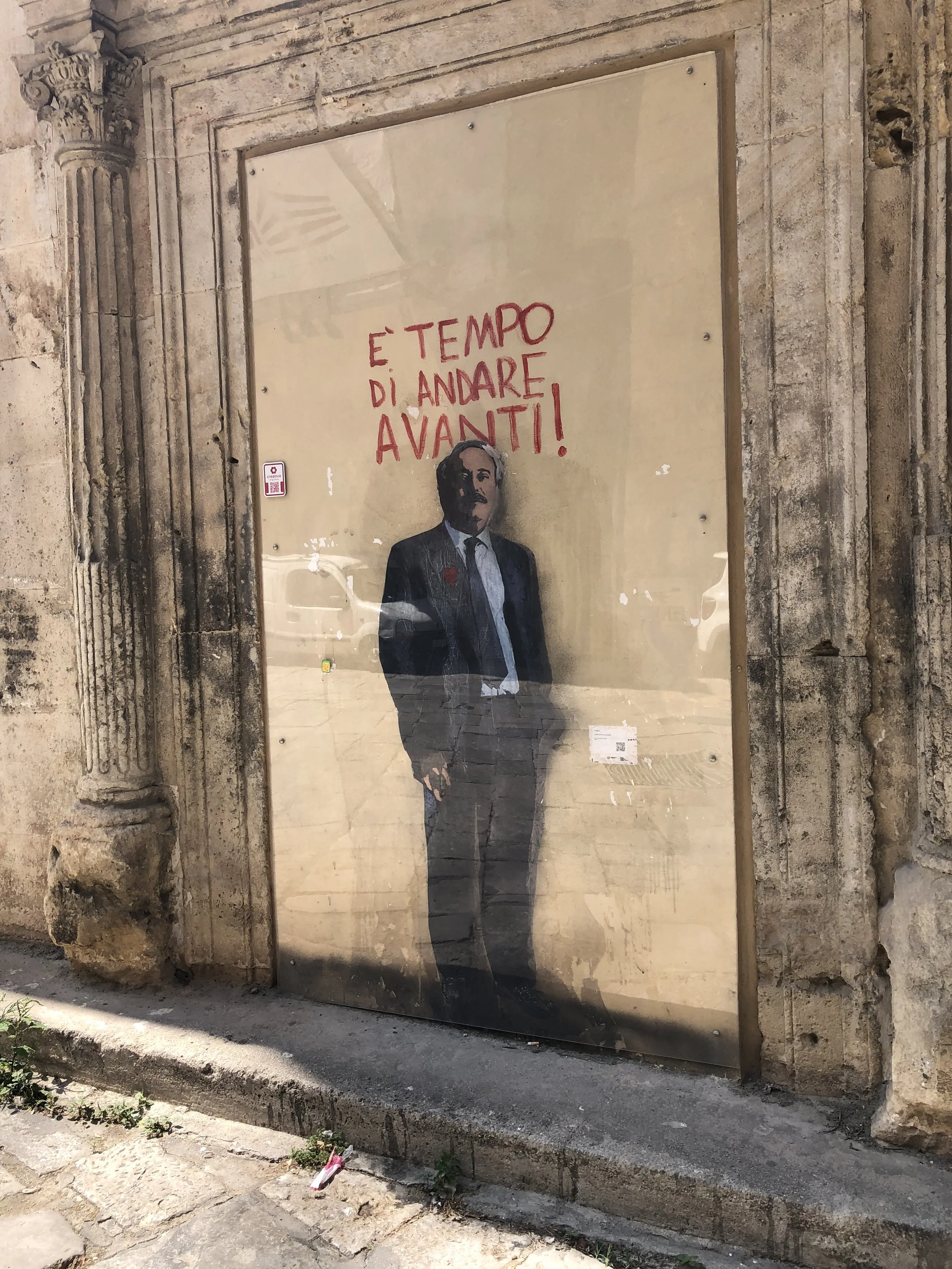
A mural in central Palermo of anti-mafia magistrate Giovanni Falcone, who was killed by the mafia in 1992. The text reads, “It’s time to move forward!”
-
“I wish for us to learn to respect one another—not because the other person resembles us, but simply because they exist. I wish there were no need for a 'license of Palermitan-ness'—or any other label—to be viewed with dignity. The richness of a community lies not in compelling everyone to be the same, but in allowing each of us to be ourselves, carrying our roots with us while simultaneously contributing to the beauty and richness of the place we call home.”
—Member of the Tamil Community
-
“There are a lot of things I've observed whilst living here, especially in Palermo. One is how the white [people] treat us when you take a commercial bus. The way they talk to us, their body language… makes us feel bad… Whatever we do and they don't— they see it in different way because... they see us like… animals… They insult us, always fighting with us in our homes, all because we are not from here. And it's really disturbing and it doesn't make us feel comfortable living here.”
—Member of the Ghanaian Community
-
"The stigma of the foreigner becomes increasingly exploited...even when the economic and fiscal requirements are all met, people decide not to offer housing to foreign nationals."
—Member of the Tamil Community
-
"A society that cannot accept a Black doctor is not a just society."
—Member of the Ghanaian Community
-
"It feels like my identity... is decided for me... I'm constantly reminded of how different I am."
—Member of the Ghanaian Community
-
"Whenever we, the Blacks, work... the amount of money... that's not the same amount that they're giving to the white people."
—Member of the Ghanaian Community
-
"People make jokes about my accent and about my surname and where I come from."
—Member of the Ghanaian Community
-
"Behind each Bengali person is a story, a family, sacrifices, hard work and dignity."
—Member of the Bangladeshi Community
-
"There is a right that is being violated. There is also a dignity that is being violated. Because I think that being human first means deserving the right to live... having the same rights as every individual."
—Member of the Ivorian Community