The Right to a Future
The Right to a Future, as reflected in the Charter of Palermo, affirms that all people, especially unaccompanied minors and vulnerable migrants, must have access to safety, stability, and the conditions necessary to build meaningful lives.
Italy’s laws and social values are generally quite serious in their commitment to the rights of children and childhood. However, migrant and diaspora communities experience this in much different, more restricted ways than children born to Italian citizens. Italy’s ius sanguinis (citizenship by blood) system, instead of ius soli (birthright citizenship, or automatic citizenship for children born on Italian soil), means that children born to non-citizen migrants may not apply for citizenship until after they turn eighteen years old. This, in turn, limits these children’s ability to realize and enjoy a variety of human rights, including ultimately the right to dignified work for which they are equally qualified as Italian citizen children with whom they go to school and university.
Participants in this research, including many young adults in the Tamil, North and West African communities, pointed out these inequities and the challenges they pose. These include ineligibility to pursue public sector employment, which is often some of the most stable and well-remunerated work in the limited labor market of Southern Italy. Consequently, many young adults in the Tamil, Bangladeshi, and other communities end up leaving Palermo to seek better, more dignified employment in Northern Italy, Northern Europe and the United Kingdom.
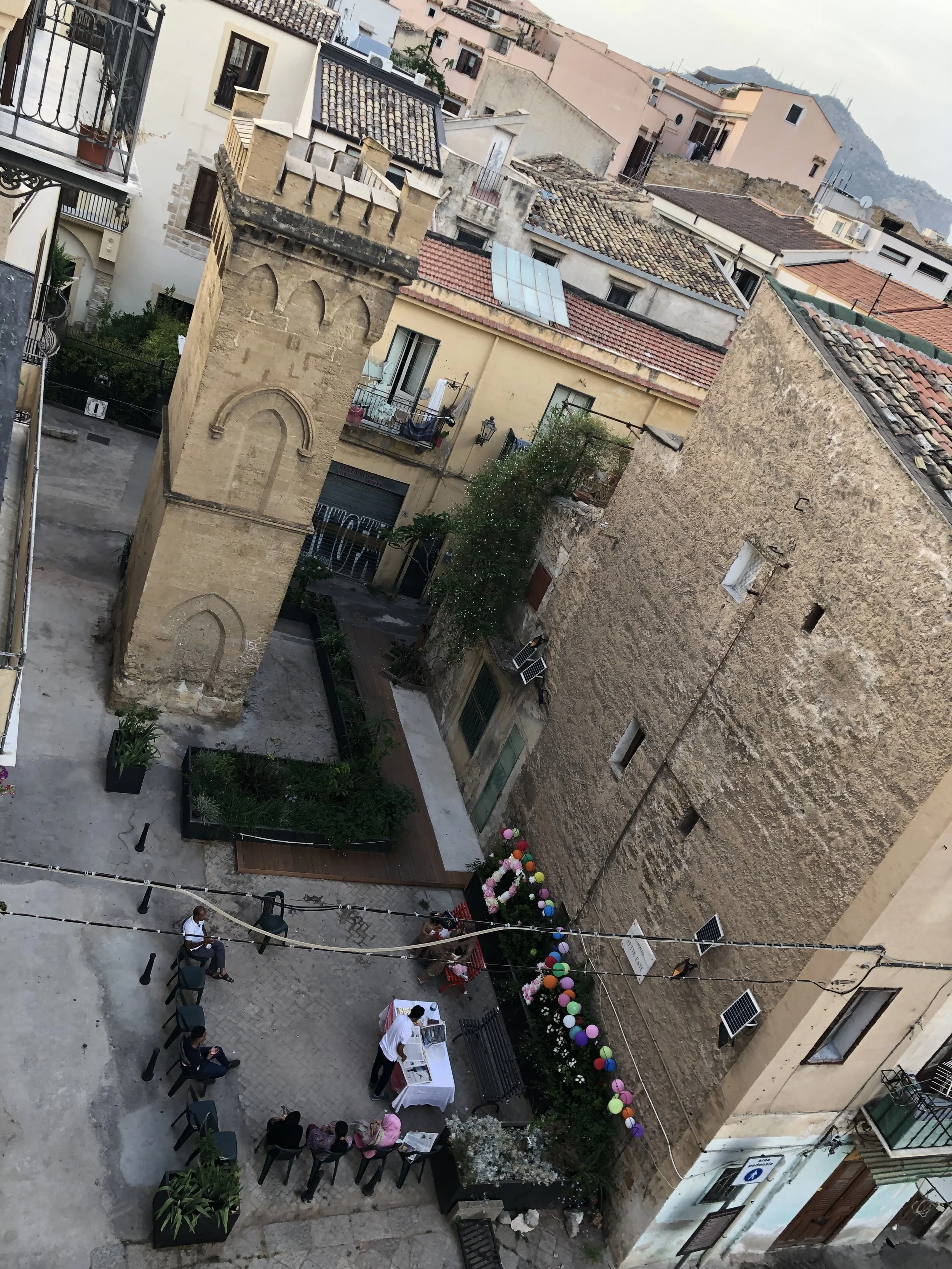
A birthday party for a one-year-old in Palermo’s Bangladeshi community.
-
"Somebody that spent five years, the person is supposed to have permit to stay, the permesso di soggiorno [residence permit]. But they will not give it to him."
—Member of the Nigerian Community
-
"It's the right for the children to go to school as a migrant in a foreign country."
—Member of the Nigerian Community
-
"The right to citizenship for foreign children born here remains highly complicated... There is even talk of making the law even more restrictive—requiring additional years of residency proof even after the age of 18... It is a birthright, and it should be treated as such here."
—Member of the Ghanaian Community
-
"It should be automatic... the child didn't ask to come... How can you give a paper to a father and tell the child they don't deserve it?"
—Member of the Ivorian Community
-
"Our children who are born here—despite all the degrees and qualifications they hold—are unable to integrate... they are forced to leave Italy and go work elsewhere."
—Member of the Ivorian Community
-
"Family reunification cannot be left to the whim of a landlord. It is a fundamental right; to deny it is to sever ties, shatter dreams, and break lives."
—Member of the Ghanaian Community